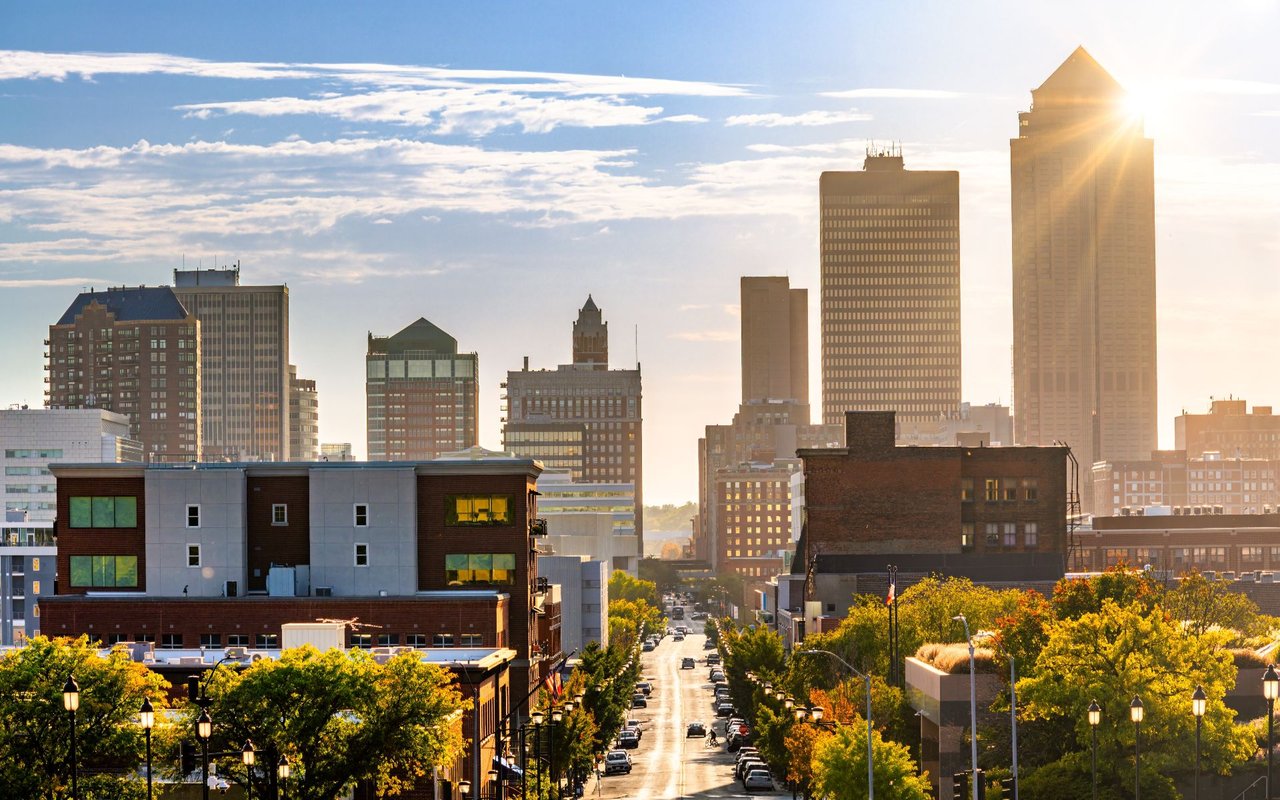
Three trackers, three different 2026 price figures for the same few blocks of Manville Heights: a 12-month median of $525,000, another of $620,000, and a single-month median of $224,808. Nothing about the houses changed between those readings. What changed was which handful of homes happened to be counted. That is how data behaves in a pocket of the city so small that a single sale can swing the neighborhood's reported median by six figures.
That gap is the story. Iowa City publishes one citywide median home price, somewhere between $300,000 and $337,000 depending on which tracker and which month you check in 2026. That number gets treated as a description of the market. It isn't. It's an average of three products that don't behave the same way, don't compete for the same buyer, and don't even generate stable enough data to agree with each other. If you're comparing neighborhoods here, the citywide median is the least useful number you'll look at.
One city, three products
One tracker put Iowa City's median sale price at $325,000 for the three months ending June 2026, with homes selling in an average of 22 days. Another tracker's March 2026 read showed a median of $300,000 and homes taking 85 days to sell, a swing of more than 60 days from the first figure. A third tracker's February 2026 snapshot landed on a $337,000 median list price with 38 days on market. Three trackers, three different months, three different numbers that don't reconcile into one story.
Part of that is normal seasonal noise. But a bigger part of it is structural: Iowa City isn't one housing market wearing different price tags. It's three markets with almost nothing in common except a shared zip code. A historic home a mile from the hospital, a covenant-restricted new build in a planned community, and a downtown condo are not variations on a theme. They're different products bought by different people for different reasons, and averaging their prices together produces a number that doesn't describe any of them.
What extreme scarcity looks like
Manville Heights sits in a bend of the Iowa River, walkable to University of Iowa Hospitals and Clinics, Carver-Hawkeye Arena, and Hancher Auditorium, with pedestrian bridges connecting it straight into downtown. It was built up in the early twentieth century to house UI faculty and physicians, and the Colonial Revival, Tudor, and Craftsman homes from that era are still what's on the ground today. There's no commercial strip inside the neighborhood. It's just houses, mature trees, and the river.
The scarcity is the headline. Multiple 2026 listing trackers showed as few as one to three active Manville Heights listings at any given time, with roughly a dozen to fifteen sales a year across the whole neighborhood. When a market that thin reports a median, that median is really just describing whichever three or four houses happened to close that quarter. That's why the reported numbers don't agree with each other: one source pegged the 12-month median at $525,000, another at $620,000 on the same underlying data set, and a third tracker showed a single month's median sale price at $224,808 with days on market jumping from 52 to 82. None of those numbers is wrong. They're all just measuring a sample too small to hold still.
For a buyer, the practical takeaway isn't "Manville Heights costs X." It's that when something in that price band and location does come up, there is very little else on the market to compare it with, which leaves you weighing it against a handful of past sales instead of a deep field of alternatives. If you're a physician or faculty hire weighing walk-to-work proximity against a longer commute, that's the actual trade you're making, not a trade on square footage.
One more wrinkle worth knowing if walk-to-downtown matters to you: the eastbound Burlington Street bridge connecting the west side to downtown, Kinnick Stadium, and UIHC is slated for replacement, and the City of Iowa City already held public information meetings on the project in March and June 2026. That's not a reason to avoid the neighborhood, but it's the kind of construction timeline worth asking your agent about before you assume your walking or driving route stays exactly as it is today.
The planned alternative three miles away
The Peninsula neighborhood, reached off Foster Road from the Dubuque Street exit on I-80, is a different product entirely. It was built as a New Urbanism community, a planning approach that prioritizes front porches close to the sidewalk, short walkable blocks, and a mix of housing types inside a single development, the same tradition behind well-known projects like Seaside and Celebration. The Peninsula's version of it grew out of a public-private partnership: the City of Iowa City bought the land, set aside open space along the river, and worked with developers to build out the neighborhood from there, according to the planning firm that designed it.
On the ground, that means an HOA that handles lawn care and snow removal, design covenants you'll want to review before you repaint a railing, a community dog park, and a calendar that includes an annual Peninsula Block Party in August with music, games, and food. Button, a Japanese restaurant open evenings Monday through Saturday, is one of the neighborhood's small commercial anchors. The Peninsula borders Elks Golf Course to the north and east, and sits on the Downtown and Manville Heights bus route.
What the Peninsula doesn't have is a stable published median price the way Manville Heights does, largely because its inventory mixes new construction with resale in a neighborhood still filling in, which keeps sample sizes too thin for trackers to publish a reliable number. That absence of data is itself informative. It tells you this is a newer, still-forming product where you should expect to negotiate off comparable recent sales your agent pulls directly, not off a published citywide or neighborhood average.
The cheapest door into the same city
Downtown and Near Southside condos are the third product, and they solve for something entirely different: lower upfront cost and walkability to the Pedestrian Mall rather than to the hospital. As of July 2026, Iowa City condos on the market ranged from $103,000 to $1,095,000, with a median around $328,000 and an average sale price of $359,450. Condos in this segment spent an average of 49 days on the market.
That price floor is the real story for this segment. A grad student, resident physician early in a rotation, or young professional who wants low-maintenance ownership close to campus and downtown can get in well under the citywide median, at the cost of HOA fees, shared walls, and a building population that turns over more often than a single-family block. It's a fundamentally different ownership experience than either of the other two products, and it's the one most likely to compete on price alone rather than on scarcity or design covenants.
Why the numbers keep disagreeing with each other
It's tempting to want one clean citywide number and treat the rest as noise. Even the Federal Reserve Bank of St. Louis, which tracks a quarterly house price index for the Iowa City metro area, publishes that data with revision notes attached, because home price indexes get restated as more sales data comes in. If a federal statistical agency builds in room for its own numbers to move, a neighborhood-level median built on a dozen annual sales is going to move even more.
That's not a flaw in the market. It's a feature of how thin, high-value, low-volume neighborhoods report data. The disagreement between trackers on Manville Heights isn't evidence that the neighborhood is unstable. It's evidence that you're looking at a genuinely small number of transactions, and no single number from any single month should be treated as a permanent price tag.
What this means if you're comparing
If you're relocating for a UI Health Care or university position and proximity to work matters more than square footage, Manville Heights is the product to watch, and watching means being ready to move within days of a listing hitting the market, not weeks.
If you want new construction, a managed exterior, and a built-in sense of community events without giving up walkability, the Peninsula is worth a visit, with the understanding that pricing there will come from recent comparable sales your agent pulls directly rather than from a stable published median.
If your priority is minimizing upfront cost while staying close to downtown, the condo market gives you the widest price range in the city and the fastest path to closing, with the trade-off of HOA fees and a more transient building population.
FAQ
Why do different real estate sites show such different prices for the same Manville Heights homes? Manville Heights sells roughly a dozen to fifteen homes a year across the whole neighborhood. With a sample that small, one high-end sale or one distressed sale can shift the reported median by tens of thousands of dollars from one reporting period to the next.
Does the Peninsula have any historic homes, or is everything new construction? The neighborhood was built from the ground up as a planned community rather than developed organically over decades, so its housing stock is newer than Manville Heights, with new construction and early resales making up most of what's on the market.
Is a downtown condo a good option if I need to be close to UIHC? It depends on which building. Some downtown and Near Southside condos are within walking distance of the hospital campus, but distance varies enough building to building that it's worth checking the specific route and walk time rather than assuming all downtown condos are equally close.
If you're trying to figure out which of these three Iowa City products actually fits how you live and work, Kevin Wu can walk you through the current inventory in each and tell you honestly which one is worth waiting for.
This article is general information, not legal, tax or financial advice. Consult a qualified professional about your situation.